
There are people who remind us that holidays are not necessarily about changing places. They can be about the feeling of safety, returning to a familiar place, following the same routes, sitting in a favourite spot, swimming in the same sea. For Giannis, Aegina is all of these things combined. It is Bouza’s Fanari, his favourite rocks, diving underwater with his goggles, and a specific route through the sea that he repeats every summer.
For his mother, Aegina is a familiar and safe place that allows them to enjoy their holidays in their own way, within the stability and routine that, for them, does not mean limitation, but safety.
We spoke with her about Giannis, his small and great achievements, the difficulties that something as seemingly “ordinary” as a holiday can involve, but also about all the things we can do, often very simply, to make holidays, the sea, a restaurant or a trip truly accessible to everyone.
Because inclusion does not always require major changes. Sometimes it starts with something much simpler: looking a little less and trying to understand a little more.
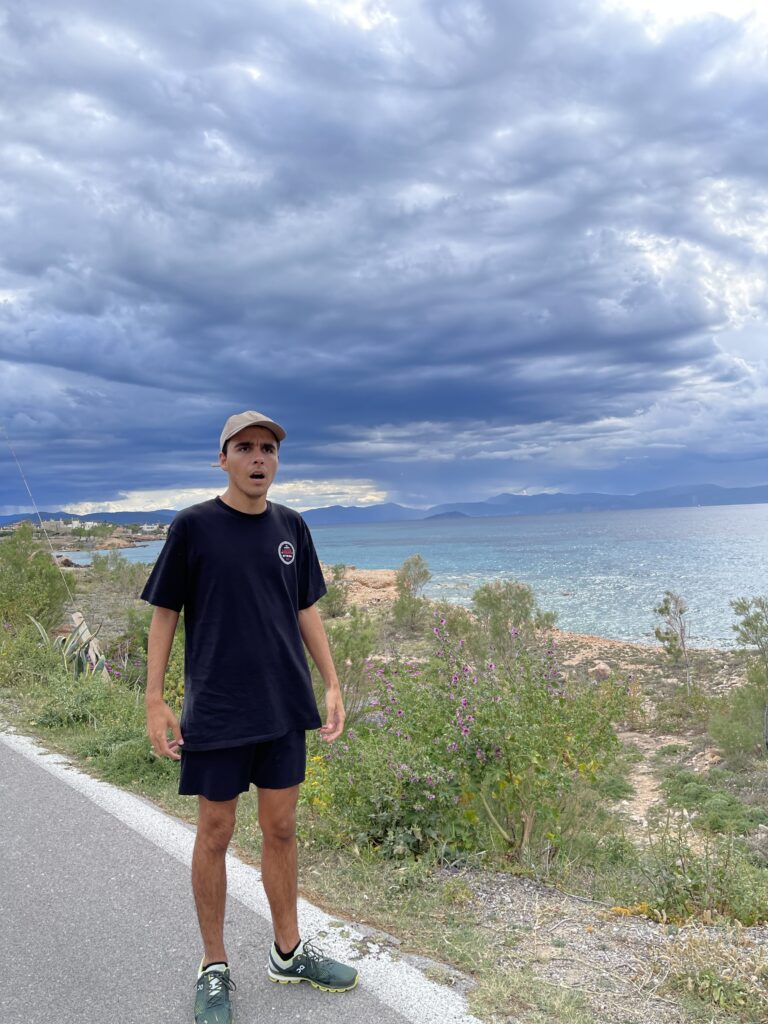
Let’s Meet Giannis – Beyond Autism
If you were to introduce Giannis without using the word “autism” at all, what would you tell us about him?
Giannis is a young man who, although he has not developed speech, has so many things he wants to express but cannot do so in the usual way. He has his own way of communicating, perceiving the world, and showing us what he wants and what he loves. You simply need to learn how to listen to him differently.
Is there a side of Giannis that people do not see at first glance and that you wish they had the opportunity to discover?
To truly get to know Giannis, someone needs to accompany us in his everyday life. It is difficult to understand Giannis if you have not experienced him up close, if you have not seen his habits, his reactions, his little joys and his own way of communicating. There are things you cannot understand at first glance; they require time and meaningful contact.
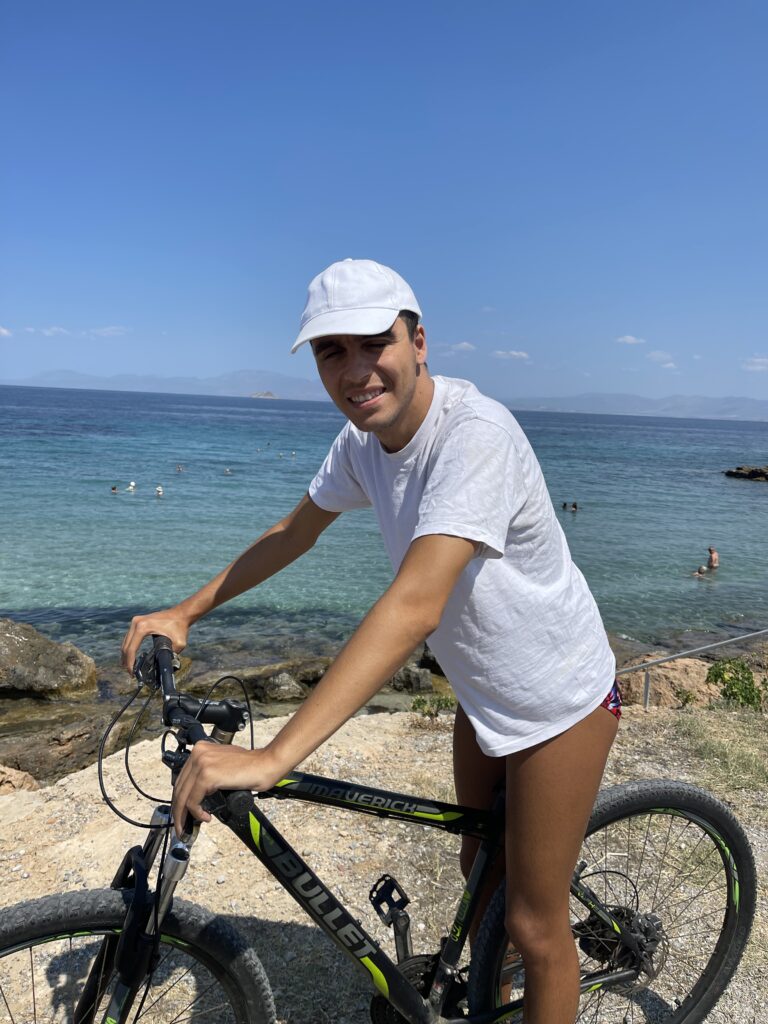
Is there something you once considered impossible for Giannis that eventually surprised you?
I thought it was impossible for him to learn how to ride a bicycle and use the brakes. It took him many years, but eventually he managed to do both. And these are the moments that remind you not to put limits on a child too easily. One step at a time, and every small achievement can become the beginning of the next one.
Giannis and Others
What is the biggest misconception you still encounter about people on the autism spectrum?
I believe the biggest misconception is that people think an autistic person is like the character in the film Rain Man. In reality, every person on the spectrum is different, with their own abilities, difficulties, needs, and their own way of communicating and perceiving the world.
When you are in a public space and Giannis behaves in a way that someone does not understand, what would you like the person next to you to do?
I would simply like people not to stare. In general, it is uncomfortable when we stare at something different from what we are used to. There is no need to comment or try to draw conclusions about something we do not know. Sometimes the most discreet and humane thing someone can do is simply to carry on with their day, without making us feel like we are being watched.
What bothers you most: a look, a comment, excessive “help,” or indifference?
Definitely a comment; I would describe that as rude. But by now, nothing particularly bothers me. I have learned to ignore it when someone chooses to behave badly. I cannot control everyone’s behaviour, but I can choose how I respond to it.
Giannis and Aegina
What does Giannis love most about his holidays in Aegina? Is there something he looks forward to every time he comes?
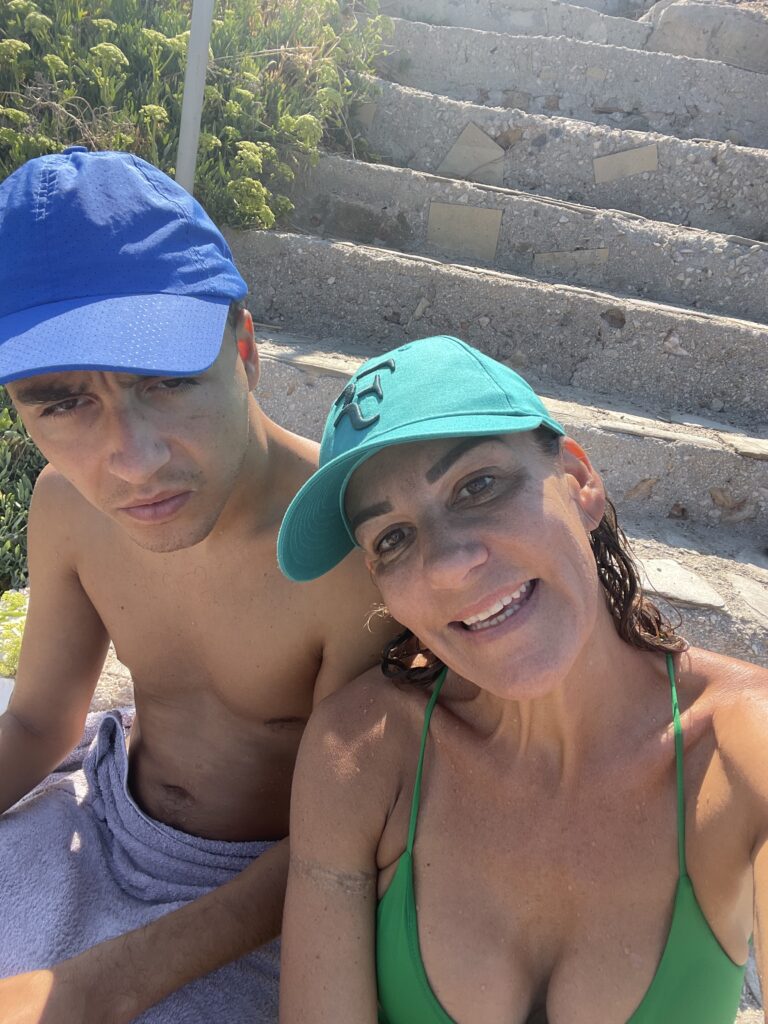
Giannis looks forward to going swimming at Bouza’s Fanari, on the right-hand side. He has a specific spot where he sits on the steps, and even in the sea he has a specific imaginary route that he swims along. With his goggles, he looks at his favourite rocks and dives underwater around them. It is one of his favourite routines and, perhaps to someone looking from the outside, it may seem like simple repetition. For Giannis, however, it is so much more: it is his joy, his sense of familiarity, and his way of enjoying the sea on his own terms.
What is something that is completely ordinary for most of us during a holiday, but requires planning or preparation for you?
For everyone else, holidays mean carefree days, stepping away from your routine, not following a schedule and relaxing. For Giannis and me, however, even during our holidays we need to follow a stable daily routine, with a beginning, middle and end, because this calms him. Repetition, familiarity and knowing how his day will end are calming for him. As for me, even if I go out with friends and stay out late, I will always wake up very early to start my day with Giannis. So, for us, routine does not stop just because the holidays have arrived; it simply comes with us to Aegina.
How easy is it really for you and Giannis to holiday in Aegina? What is easy here and what is not?
What Aegina offers us is familiarity and stability. Even if I wanted to take him on holiday to another island, it would not be easy, because Giannis becomes anxious in unfamiliar environments. Aegina, on the other hand, is a place he knows and loves, and that makes things much easier for him. As for me personally, Aegina also gives me the security of familiarity, because I have been spending my summers here since I was one year old. I can go out on my own, go for dinner, to the cinema or for a drink by myself, because I will certainly run into a friend. So Aegina has become a place of safety for both of us, but for different reasons.
Are there places or situations on the island that you avoid, not because you do not like them, but because they are difficult for Giannis?
As I mentioned earlier, Giannis does not like change. I will give an easy example with Bouza’s Fanari, where we swim. For those who know the area, when the wind blows from the right, the water on the left is calm, while when the water on the right is murky, the water on the left is clear. Giannis and I, however, will swim only on the right-hand side, even when there are waves and bubbles. For him, that particular side, that particular route and the way he has learned to enjoy the sea are part of his sense of safety, and it is not easy for him to change simply because the circumstances require it.
Have you experienced a moment in Aegina when a stranger, professional or local resident reacted in a way that made you feel genuinely welcome?
We like eating at restaurants where Giannis is welcomed and looked after. It is very important to us to feel that we do not have to constantly explain Giannis or apologise for him. Being welcomed simply, naturally and kindly makes a huge difference. Nothing extraordinary is needed; often, all it takes is for someone to treat you with the same respect and naturalness they would show any other customer.
If you walked into a restaurant, café, ferry or shop in Aegina, what 2–3 very simple things could the staff do to make the experience of an autistic person much better?
Every autistic person has their own individual characteristics. One example with Giannis is that he wants to sit in the same places, in the same seat on the ferry, at the same table in a restaurant. In general, I would like people to observe and try to improve themselves through empathy. In other words, to put ourselves “in the other person’s shoes.” To observe what the person in front of us needs and try to adapt as much as we can, rather than expecting everyone to behave in the same way. Sometimes a little understanding can make the entire experience easier.
When we talk about “accessible tourism,” we usually think about ramps and mobility difficulties. What do we forget when we talk about invisible disabilities?
Invisible disabilities, such as autism, are for the most part behavioural disabilities. Empathy is needed to understand different social behaviour, as well as a willingness to try to understand it. True inclusion needs to take into account needs that are not immediately visible.
If the Municipality of Aegina told you tomorrow, “Give us three changes we can realistically make,” what would you suggest? Or, if Giannis could ask one thing of Aegina, what do you think it would be?
I would like there to be more attention and calm on Aegina’s roads, and for people not to drive their cars and motorbikes so fast. It is something that concerns everyone, but for a person who may have difficulty managing intense and unpredictable stimuli, calmness and safety are even more important. A calmer and safer everyday environment on the roads would make the island better for everyone.
To Close…
What would you like to say to a parent who has just learned that their child is on the spectrum and is currently afraid of the future?
The only thing I would say is, “One step at a time.” Set short-term goals that the child can achieve, and then move on to the next goal. You do not need to look at the entire journey from the beginning and be afraid of everything that might come. You move forward little by little, celebrate every small achievement and continue. And, of course, consult specialised doctors rather than Facebook groups. Every child has their own journey, and there is no reason to compare one family with another.
And what would you like to say to all of us who might sit at the table next to Giannis tomorrow?
Don’t be alarmed if Giannis grabs a French fry from your plate! He does not have the patience to wait for his own. And perhaps that is ultimately the most human way to end a conversation like this. Because behind every diagnosis, there is first and foremost a person, with their own habits, desires, difficulties, joys and their own unique way of being in the world. Giannis does not need to become “like everyone else” in order to have a place among us. We need to learn to make a little more room for difference.
When we talk about accessibility, we should not think only about whether a person can enter a space, but also whether they can feel safe, comfortable and accepted within it. And perhaps that is ultimately the most human way to close such a conversation. Because a truly beautiful Aegina and a truly inclusive society are those where everyone can feel safe, welcome and free to be themselves. And perhaps, somewhere between the rocks of Bouza, Giannis’ underwater dives and a French fry that may suddenly disappear from the plate next to you, there is a very simple lesson: we do not need to understand everything in order to be kind.
“All we need is the willingness to understand a little more.”